
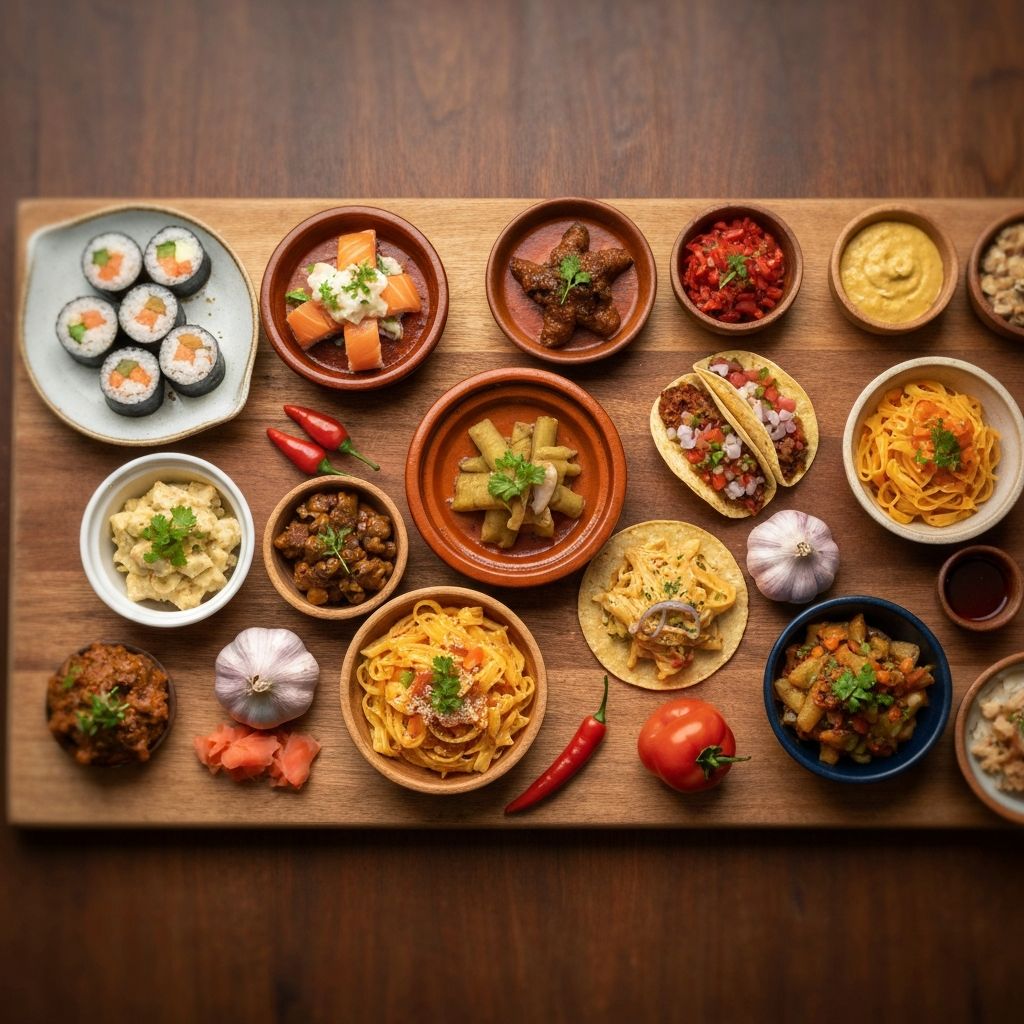
The human diet is not a single, universal entity. Across the world's diverse populations, dramatically different systems of food preparation, ingredient use, and culinary philosophy have developed in response to geography, climate, agriculture, trade, religion, and cultural tradition. Studying these dietary traditions comparatively is not about determining which is superior — it is about understanding the remarkable breadth of nutritional strategies that human societies have developed over millennia.
East and Southeast Asia: Fermentation, Balance, and Whole-Food Cooking
East and Southeast Asian culinary traditions encompass extraordinary diversity — from the umami-forward cooking of Japan to the bold, aromatic profiles of Thai and Vietnamese cuisines — yet they share several structural characteristics worth examining.
Rice (in its many varieties) and wheat-based noodles form the caloric backbone of many East and Southeast Asian diets. Alongside these staple carbohydrates, legumes — particularly soya — occupy a central position. Tofu, tempeh, miso, soy sauce, and edamame represent different stages of soya processing, from minimally processed whole bean to extensively fermented paste. This diversity of soya applications provides varying nutritional profiles depending on processing method.
Fermentation is a defining feature of many East Asian dietary traditions. Miso, natto, kimchi (Korean fermented vegetables), tempeh, and numerous regional fermented sauces and pastes have historically served preservation functions while also transforming the biochemical composition of their base ingredients. Fermentation modifies protein digestibility, produces organic acids that lower pH and inhibit pathogenic organisms, and generates metabolites including B vitamins and bioactive peptides.
Traditional Ingredient Spotlight: Dashi
Dashi is a foundational Japanese stock made from kombu (dried kelp, Saccharina japonica) and katsuobushi (dried, fermented, and smoked bonito tuna). Its defining flavour quality is umami — the fifth basic taste, associated with the amino acid glutamate and the nucleotides inosinate and guanylate. Kombu is exceptionally rich in naturally occurring glutamate. Dashi illustrates how culinary traditions can arrive at sophisticated flavour outcomes through ingredients with distinctive biochemical compositions, long before formal nutritional or flavour science developed the vocabulary to describe why they work.
South Asia: Spice-Mediated Complexity and Legume-Centred Diets
The dietary traditions of South Asia — India, Pakistan, Bangladesh, Sri Lanka, and neighbouring countries — are characterised by an exceptionally sophisticated use of spices and by the prominence of legumes as a primary protein source across many regional cuisines. Dals (lentils, split peas, and dried beans prepared as thick stews) constitute a daily dietary staple across much of the subcontinent, providing protein, iron, folate, and dietary fibre.
The spice traditions of South Asia merit attention from a compositional perspective. Turmeric (Curcuma longa), a rhizome containing curcuminoids including curcumin; coriander, cumin, fenugreek, black pepper, cardamom, cloves, and many others are used not merely for flavour but as part of a deeply embedded culinary philosophy. These spices contribute phytocompounds — secondary plant metabolites — to the diet. The science of how dietary phytocompounds interact with human physiology is an active area of research, though it is important to distinguish between mechanistic studies conducted at high concentrations in laboratory settings and the effects of typical culinary amounts.
Many South Asian food traditions include yoghurt (dahi) as a condiment and cooking ingredient, representing a culturally embedded source of fermented dairy. The use of ghee (clarified butter) as a cooking medium is traditional in many regional cuisines, providing a fat-soluble carrier for fat-soluble vitamins and flavour compounds.
The Middle East and North Africa: Legumes, Whole Grains, and Olive Culture
The culinary geography of the Middle East and North Africa (MENA) encompasses the eastern Mediterranean, the Levant, the Arabian Peninsula, Egypt, and the Maghreb — regions that share certain foundational ingredients while exhibiting considerable local variation. Chickpeas are perhaps the most emblematic ingredient of this zone, forming the basis of hummus, falafel, and countless stewed preparations. Lentils and broad beans (fava beans) are similarly central.
Wheat — in the form of flatbreads (khubz, markook, injera across the Red Sea border), bulgur wheat, and freekeh (green durum wheat that has been roasted) — provides the caloric foundation of much of the region's traditional diet. Freekeh, in particular, is notable for its relatively high fibre content and distinctive smoky flavour resulting from its processing method.
Olive oil is the characteristic fat of the eastern Mediterranean and North African kitchen, and has been cultivated in the region for at least 8,000 years. Its culinary dominance means it is a primary source of monounsaturated fatty acids (particularly oleic acid) in the traditional diets of these regions. Fresh herbs — parsley, mint, coriander, dill — are used in quantities that qualify them as dietary ingredients rather than mere flavourings in many preparations, contributing micronutrients and phytocompounds.
Latin America: Maize, Biodiversity, and the Three Sisters
Latin American dietary traditions reflect thousands of years of agricultural development in the Americas, centred on crops that were unknown to the rest of the world until the Columbian Exchange beginning in the late 15th century. Maize (corn), beans, and squash — known collectively as the "Three Sisters" in many indigenous North and Central American agricultural traditions — represent a complementary intercropping system whose combination also provides nutritional complementarity: maize is relatively low in the amino acid lysine, which beans supply abundantly; beans fix atmospheric nitrogen, benefiting the soil in which maize grows.
Nixtamalisation is a traditional Mesoamerican technique for processing dried maize kernels: the kernels are soaked and cooked in an alkaline solution (traditionally calcium hydroxide — slaked lime — or wood ash). This process gelatinises the outer pericarp, making the kernels easier to grind, but also has nutritional consequences: it increases the availability of bound niacin (vitamin B3), which in untreated maize is largely non-bioavailable. The historical significance of nixtamalisation is substantial — populations that adopted maize as a dietary staple without this technique developed pellagra (niacin deficiency disease), while Mesoamerican populations who practised nixtamalisation did not.
Cultural Matrix: Comparative Overview of Selected Dietary Traditions
| Region | Primary Carbohydrate Source | Primary Protein Sources | Characteristic Fat | Defining Technique |
|---|---|---|---|---|
| East Asia | Rice, wheat noodles | Soya (tofu, tempeh), fish, poultry | Sesame oil, rapeseed oil | Fermentation, steaming, wok cooking |
| South Asia | Rice, flatbreads (wheat/millet) | Lentils, chickpeas, dairy | Ghee, mustard oil, coconut oil | Tempering (tarka), slow braising |
| Middle East / MENA | Wheat, bulgur, freekeh | Chickpeas, lentils, lamb, fish | Olive oil | Grilling, slow stewing, meze assembly |
| Latin America | Maize (nixtamalised), rice, potato | Beans, meat, fish | Lard (traditional), vegetable oil | Nixtamalisation, slow braising |
| Northern Europe | Rye, oats, potato | Fish, dairy, legumes | Butter, rapeseed oil | Curing, smoking, fermentation |
Northern and Central Europe: Root Vegetables, Fermentation, and Cold-Climate Adaptations
Northern European culinary traditions developed in response to climates that imposed constraints on the growing season, which shaped preservation techniques and the selection of cold-hardy crops. Rye — more frost-tolerant than wheat — became the dominant bread grain across Scandinavia, the Baltic states, and parts of Central Europe. Dense, long-keeping rye breads with low moisture content are characteristic products of these traditions, and their high fibre content reflects the intact bran and germ of whole grain rye.
Preservation through fermentation, smoking, salting, and drying created characteristic food products: sauerkraut and other lacto-fermented vegetables, salted and dried fish, cured meats. Fermented dairy — skyr in Iceland, filmjölk in Sweden, various cultured buttermilks and soured creams — is deeply embedded in the food culture of the region and represents a long tradition of extending the shelf life of milk through acidification.
The New Nordic culinary concept, formalised in the early 21st century through the Copenhagen Manifesto of 2004, has brought academic and culinary attention to traditional Nordic ingredients: foraged plants and mushrooms, cold-water fish (herring, mackerel, trout, char), game, root vegetables, and whole grain grains. This framework is notable for its explicit connection between culinary tradition, environmental sustainability, and a return to less processed ingredient forms.
Context and Limitations
This article provides a comparative educational overview of selected global dietary traditions. It does not constitute dietary advice, does not recommend specific dietary patterns over others, and does not make claims about the health outcomes associated with any of the traditions described. Cultural food traditions are enormously diverse and continue to evolve; this article necessarily presents a simplified overview. Not a medical product. Consult a doctor before making any dietary or health-related changes.