
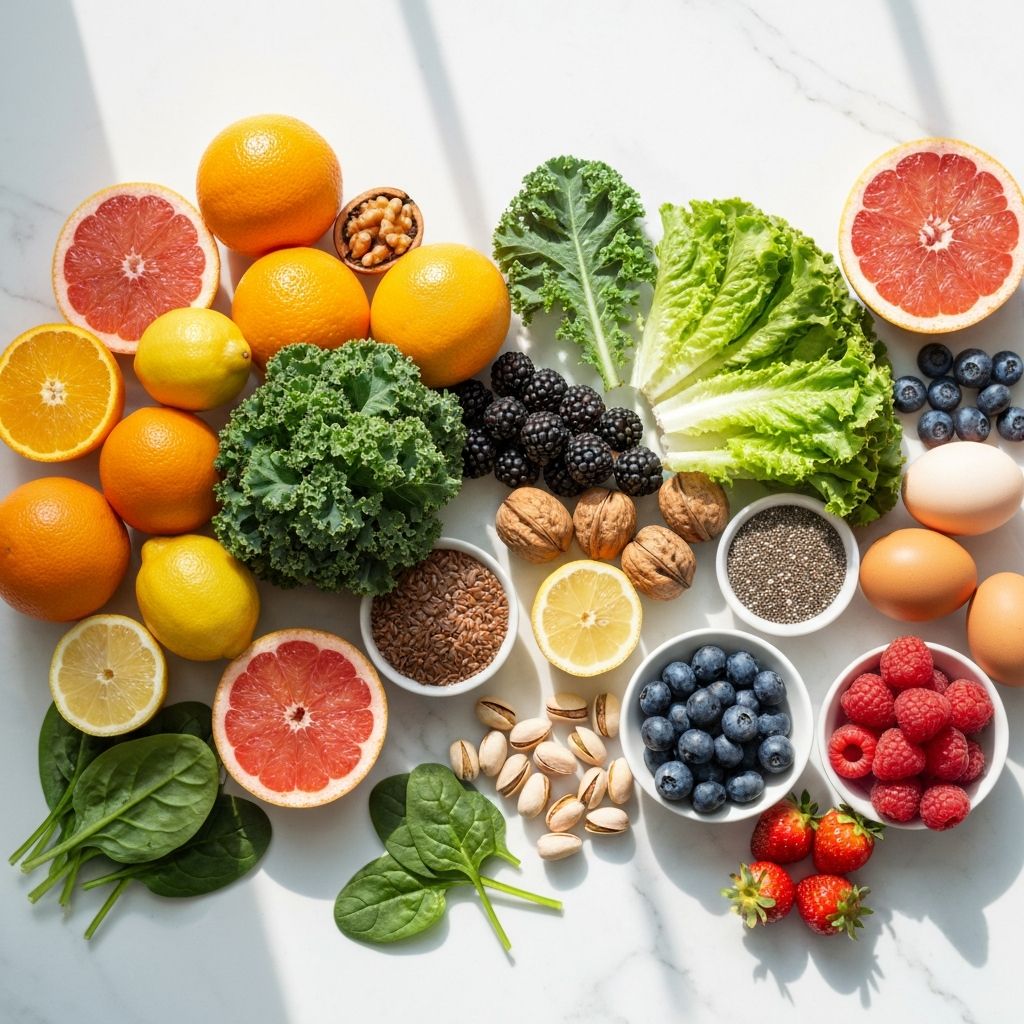
Micronutrients — vitamins and minerals — are compounds required by the human body in relatively small amounts compared to macronutrients, yet their absence or insufficiency can have profound consequences for biological function. Unlike macronutrients, most vitamins and minerals cannot be synthesised by the body in sufficient quantities and must therefore be obtained through dietary intake.
Vitamins: Fat-Soluble and Water-Soluble
Vitamins are organic compounds that fall into two broad categories based on their solubility — a characteristic that determines how they are absorbed, stored, and excreted.
Fat-Soluble Vitamins (A, D, E, K)
Fat-soluble vitamins are absorbed in the small intestine alongside dietary fat and require the presence of bile. They are transported via chylomicrons in the lymphatic system before entering systemic circulation. Because they can be stored in adipose tissue and the liver, they are not required in the diet on a daily basis — but this also means that excessive intake from supplements or fortified foods can accumulate to potentially problematic levels over time.
- Vitamin A (Retinol) — Critical for vision, particularly night vision, and for the maintenance of epithelial tissue integrity. Also involved in immune function and embryonic development. Found preformed in animal liver, dairy, and eggs. Provitamin A carotenoids (notably beta-carotene) are found in orange, red, and dark green vegetables and are converted to retinol in the body.
- Vitamin D (Calciferol) — Uniquely, vitamin D can be synthesised in the skin upon exposure to UVB radiation. It functions more as a steroid hormone than a classical vitamin. Its principal role is in regulating calcium and phosphorus absorption in the intestine and maintaining bone mineralisation. It is also involved in immune modulation. Dietary sources are limited: fatty fish, egg yolks, and fortified foods provide the most significant amounts.
- Vitamin E (Tocopherols) — Functions primarily as a fat-soluble antioxidant, protecting cell membranes and lipoproteins from oxidative damage. Found abundantly in plant oils, nuts, seeds, and green leafy vegetables.
- Vitamin K (Phylloquinone and Menaquinones) — Essential for blood coagulation, specifically as a cofactor for enzymes that activate several clotting factors. Also plays a role in bone metabolism through the activation of osteocalcin. Green leafy vegetables are the principal source of phylloquinone (K1); menaquinones (K2) are found in fermented foods and certain animal products.
Spotlight: Calcium and Vitamin D
Calcium is the most abundant mineral in the human body, residing primarily in bone and teeth as hydroxyapatite, the mineral matrix that provides structural rigidity. Beyond its structural role, calcium is a critical intracellular signalling molecule involved in muscle contraction, nerve impulse transmission, and blood clotting.
Vitamin D is integral to calcium homeostasis. Without sufficient vitamin D, calcium absorption in the small intestine is markedly reduced — typically to around 10–15% of ingested calcium, compared with 30–40% when vitamin D status is adequate. This interdependence means that calcium intake alone, without attention to vitamin D status, may not be sufficient to maintain skeletal integrity. Dietary calcium sources include dairy, fortified plant milks, tinned fish with bones, tofu set with calcium salts, and dark green vegetables such as kale and spring greens.
Water-Soluble Vitamins (B-Complex and Vitamin C)
Water-soluble vitamins are absorbed directly through the intestinal wall into the portal blood supply. They are generally not stored in significant quantities (with the exception of vitamin B12, which accumulates in the liver), meaning regular dietary intake is important. Excess is typically excreted through urine, which reduces the risk of toxicity — though extremely high supplemental doses of certain B vitamins can still cause adverse effects.
- Vitamin B1 (Thiamine) — Cofactor in carbohydrate metabolism, particularly in the conversion of pyruvate to acetyl-CoA. Critical for energy production in glucose-dependent tissues, including the brain. Found in legumes, nuts, whole grains, and pork.
- Vitamin B2 (Riboflavin) — Component of flavin coenzymes (FAD, FMN) involved in the electron transport chain and numerous oxidation-reduction reactions. Found in dairy, eggs, organ meats, and fortified cereals.
- Vitamin B3 (Niacin) — Precursor to NAD and NADP, coenzymes central to energy metabolism. Can be partially synthesised from tryptophan. Found in meat, fish, whole grains, and legumes.
- Vitamin B6 (Pyridoxine) — Involved in amino acid metabolism, neurotransmitter synthesis, and the conversion of tryptophan to niacin. Found in poultry, fish, potatoes, bananas, and fortified foods.
- Vitamin B12 (Cobalamin) — Required for DNA synthesis, neurological function, and the metabolism of homocysteine. Found exclusively in animal-derived foods (meat, fish, dairy, eggs). Those following strictly plant-based diets require supplementation or fortified food sources.
- Folate (Vitamin B9) — Participates in single-carbon transfer reactions essential for DNA synthesis and repair, and for the formation of red blood cells. Of particular significance during early pregnancy due to its role in neural tube development. Found abundantly in legumes, leafy greens, and fortified cereals.
- Vitamin C (Ascorbic Acid) — A potent water-soluble antioxidant and cofactor in collagen synthesis (hydroxylation of proline and lysine). Also enhances the absorption of non-haem iron from plant sources. Found in citrus fruits, kiwi, peppers, broccoli, and berries.
Minerals: Macromineral and Trace Elements
Minerals are inorganic elements required for a wide range of physiological functions. They are broadly categorised by the quantities in which the body requires them.
Macrominerals
Required in amounts of 100 mg or more per day:
- Calcium — Bone structure, muscle contraction, neural signalling (discussed above in the Spotlight section).
- Phosphorus — Component of ATP (the cell's primary energy currency), nucleic acids, and cell membranes. Found in protein-rich foods — meat, dairy, fish, legumes.
- Magnesium — Cofactor in over 300 enzymatic reactions, including those involved in ATP production, protein synthesis, and muscle and nerve function. Found in nuts, seeds, legumes, whole grains, and leafy greens.
- Potassium — The principal intracellular cation; works with sodium to maintain fluid balance and electrical gradients across cell membranes, which are essential for nerve impulse transmission and muscle contraction. Found in fruits, vegetables, legumes, and dairy.
- Sodium — Principal extracellular cation; regulates extracellular fluid volume, osmotic pressure, and nerve function. Consumed primarily through sodium chloride (common salt) in the diet.
Trace Minerals
Required in amounts less than 100 mg per day, yet functionally indispensable:
- Iron — Component of haemoglobin and myoglobin, enabling oxygen transport. Also found in cytochromes involved in cellular energy production. Haem iron (from animal sources) is absorbed more efficiently than non-haem iron (from plant sources).
- Zinc — Structural component of many enzymes and transcription factors; involved in immune function, wound healing, and DNA synthesis. Found in meat, shellfish, legumes, nuts, and seeds.
- Iodine — Required for synthesis of thyroid hormones, which regulate metabolism, growth, and neurological development. Found in seafood, dairy, and iodised salt.
- Selenium — Component of selenoproteins, including glutathione peroxidases, which defend against oxidative damage. Found in Brazil nuts, seafood, meat, and cereals (levels vary by soil selenium content).
Context and Limitations
The information presented in this article is intended for educational purposes only. It does not constitute individual nutritional advice, does not diagnose any deficiency condition, and cannot substitute for assessment by a qualified healthcare professional. Nutrient requirements vary significantly by age, sex, physiological state, and individual health status. Not a medical product. Consult a doctor before making any dietary or health-related changes.